AI Video Translation: How AI and Human Translators Work Together
Videos help businesses, creators, and educators reach people around the world. But translating a video is more than changing words from one language to another. Tone, culture, humor, and context also matter. AI can now transcribe, translate, subtitle, and dub videos in less time. But AI can still miss important details. Human translators can review the work, fix mistakes, and make sure the final video sounds natural. The best approach is often to use both: AI for speed and humans for accuracy and context.

What Is AI Video Translation?
AI video translation is the process of using artificial intelligence to convert the spoken and written content of a video into another language. Depending on the tool, this can include transcription, translation, subtitle generation, AI dubbing, and voice synchronization.
Instead of translating a video manually from beginning to end, AI can automate several parts of the process. A typical workflow starts by converting the speech into text. The transcript is then translated into the target language, after which subtitles or dubbed audio can be created.
This makes AI video translation useful for creators and organizations that need to adapt a large number of videos for audiences in different languages. However, the quality of the final result depends on the video, the languages involved, the AI tool being used, and whether a human reviews the translation.
What AI Does Best in Video Translation
AI is particularly useful when a video translation project contains a large amount of repetitive language work. It can process speech, text, and subtitles much faster than a person working manually.
AI is especially effective for:
Automatic speech recognition.
Video transcription.
Initial translation drafts.
Subtitle generation.
Terminology consistency.
Large-scale multilingual projects.
Faster turnaround times.
For example, a creator with dozens of educational videos may use an AI video translation service to transcribe and translate the videos before a human reviews the results. This allows the translator to spend less time on repetitive work and more time checking the parts that require judgment.
AI is therefore most useful as a starting point for many video translation projects. It can handle a large amount of the initial work, while human review helps improve the final result.
How AI Translates a Video
AI video translation is not a single process. Different technologies work together to turn a video in one language into a version that can be understood by another audience.
Speech Recognition
The first step is usually converting spoken dialogue into text. AI speech recognition systems listen to the video and create a transcript of what the speakers are saying.
Machine Translation
The transcript can then be translated into the target language. AI translation systems use the surrounding text and language patterns to create the translated version.
Subtitle Generation
The translated text can be divided into subtitles and synchronized with the video. Good subtitle generation is not only about translating the words. The text also needs to appear at the right time and remain easy to read.
AI Dubbing
Some video translation tools can turn the translated text into spoken audio. AI-generated voices can be used to create a dubbed version of the video in another language.
Voice and Lip Synchronization
More advanced tools can try to match the translated voice with the original speaker's timing. Some can also adjust the speaker's mouth movements to make the translated dialogue appear more natural.
These technologies can be used separately or together, depending on the type of video and the desired result.
Why Human Translators Still Matter
AI can translate large amounts of text quickly, but language is not always straightforward. The meaning of a sentence can change depending on the situation, the audience, and the words surrounding it.
A translation can be grammatically correct and still sound unnatural to a native speaker. Human translators can identify these problems and adjust the wording so the message feels natural in the target language.
Human review is especially useful for:
Humor and idioms.
Cultural references.
Industry-specific terminology.
Brand voice.
Emotional context.
Audience expectations.
Ambiguous phrases.
Local expressions.
For example, a joke that works in English may not have the same meaning when translated directly into another language. A human translator can rewrite the expression while keeping the original idea and purpose.
This becomes even more important for videos involving technical, medical, educational, legal, or highly specialized information. In these cases, a small translation mistake can change the meaning of the original message.
The goal is not to replace AI with human translation. Instead, human translators can review the parts of the content where context, judgment, and cultural understanding matter most.
The AI + Human Video Translation Workflow
The strongest video translation workflows do not always require choosing between AI and human translators. Instead, each can handle the part of the process where it works best.
AI can take care of repetitive tasks such as transcription, initial translation, and subtitle generation. Human translators can then review the result, correct mistakes, and adapt the content for the target audience.
A typical workflow looks like this:
Step 1: Transcribe the Video
AI converts the spoken dialogue into a written transcript. This creates the text that will be used for translation.
Step 2: Translate the Transcript
The transcript is translated into the target language using an AI translation system. This creates a first version that can be reviewed and improved.
Step 3: Human Editing
A human translator checks the translation for grammar, meaning, tone, terminology, and unnatural wording. They can also identify mistakes that AI may have missed.
Step 4: Localize the Content
The translation is adapted for the target audience. This can include idioms, cultural references, dates, currencies, units of measurement, and other local details.
Step 5: Create Subtitles or Dubbing
The approved translation can be turned into subtitles or used to generate dubbed audio. Depending on the tool, the video may also include voice or lip synchronization.
Step 6: Quality Assurance
The final video is checked for subtitle timing, spelling, formatting, pronunciation, synchronization, and consistency before it is published.
This hybrid approach allows AI to handle much of the repetitive work while humans focus on accuracy, context, and the parts of translation that require judgment.
Why Cultural Context Matters
A translation can be correct and still sound wrong to people who speak the language every day.
This happens because languages are connected to culture. People use jokes, slang, sayings, and expressions that may not have a direct translation.
For example, imagine a video that uses a joke based on an English word with two meanings. AI may translate the words correctly, but the joke may no longer make sense in another language.
The same problem can happen with:
Jokes
Slang
Idioms
Local sayings
Cultural references
Names and places
Dates and numbers
Currencies and measurements
A human translator can spot these problems and change the wording without changing the main idea.
The goal is not to make the translated video sound like a translation. The goal is to make it sound natural to the people watching it.
Where AI Video Translation Can Go Wrong
AI video translation has improved a lot, but it can still make mistakes. The quality can change based on the video, the language, the speaker, and the AI tool that is used.
AI may have trouble with:
Strong accents
Background noise
People speaking at the same time
Names and places
Slang
Jokes
Sarcasm
Idioms
Technical words
Words with more than one meaning
Cultural references
Subtitle timing can also be a problem. A translation may be correct but appear too early, too late, or stay on the screen for too long.
AI-generated voices can have problems too. A voice may sound unnatural, pronounce a word incorrectly, or fail to match the feeling of the original speaker.
This is why checking the final video is important. AI can save time, but it should not always be trusted without review.
Translation vs. Localization: What's the Difference?
Translation and localization are not the same thing.
Translation means changing words from one language to another while keeping the original meaning.
Localization goes a step further. It changes parts of the content so they make sense to people in a specific country or region.
For example, a video may mention a price of $50. When the video is made for another country, the price may need to be shown in the local currency.
The same can happen with:
Dates
Time formats
Currency
Measurements
Names
Jokes
Local expressions
Cultural references
A good translation tells people what the original video says. Good localization also makes the video feel like it was made for them.
AI vs. Human vs. Hybrid Translation
Each approach has its own strengths.
For simple videos, AI may be enough after a quick review.
For important videos, human review can help catch mistakes.
For large projects, a hybrid workflow can give teams a balance between speed and quality.
When Should You Use Human Review?
Not every video needs the same level of human review.
AI may work well for simple videos with clear speech and simple language. But human review becomes more important when a mistake could cause confusion or harm.
Human review is especially useful for:
Medical videos.
Legal content.
Financial content.
Product advertising.
Brand campaigns.
Educational videos.
Technical tutorials.
Videos with cultural references.
For example, a small mistake in a casual social media video may not cause a big problem. But the same type of mistake in a medical or legal video could change the meaning.
The more important the message, the more carefully the translation should be checked.
Where AI Video Translation Can Be Used
AI video translation can be useful anywhere video content needs to reach people who speak different languages.
Common examples include:
YouTube videos
Online courses
Corporate training
Product tutorials
Software tutorials
Customer support videos
Marketing videos
Educational content
Gaming content
Webinars
Product demonstrations
For creators, AI translation can make it easier to reach viewers in other countries.
For businesses, it can help adapt training, support, and product videos for different markets.
The right translation method depends on the type of video, the audience, and how important the message is.
How to Choose an AI Video Translation Tool
There are many AI video translation tools, and they do not all offer the same features. Before choosing one, it helps to look at what the tool can actually do.
Important features to consider include:
Number of supported languages.
Automatic transcription.
Translation quality.
Subtitle generation.
AI dubbing.
Voice cloning.
Lip synchronization.
Speaker detection.
Subtitle editing.
Voice quality.
Export options.
Processing speed.
Privacy and data handling.
It is also important to test a tool with a real video before using it for a large project. Check the transcript, translation, subtitles, voice, and timing.
A tool that works well for a short YouTube video may not be the best choice for a medical course, technical tutorial, or large video library.
The best option depends on the type of content, the languages you need, and how much control you want over the final video.
Conclusion
Despite all the advantages AI has when it comes to translating videos, language is still deeply embedded within culture and has an emotional side to it, which is why professional interpreters become very useful in helping machines do their work. This was never AI versus people. It's the two working side by side, automation handling the heavy workload and humans understanding the cultural differences.
Businesses that depend on both are the ones building content viewers connect with, no matter what language they speak.

Lahaga Aondowase
Is the founder of AI Video Tools Pro, an AI video tools directory that helps creators, marketers, educators, and businesses discover AI video software. He researches and evaluates AI video tools based on their features, use cases, pricing, and practical workflows.
Related Articles
View All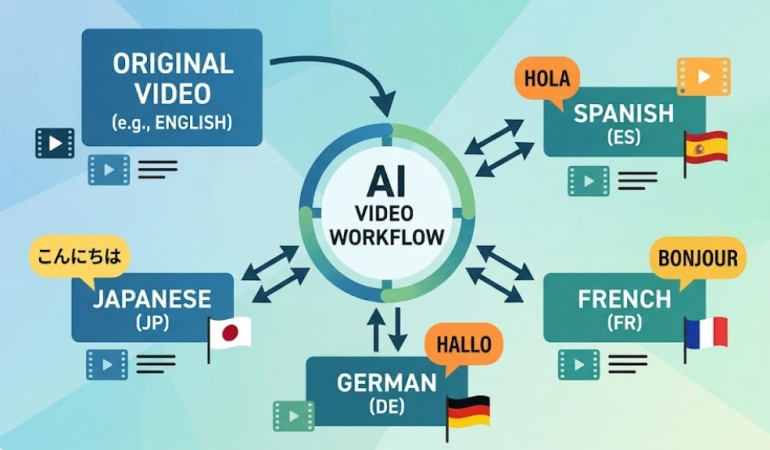

User Comments (0)